
For families whose careers and long-term plans span multiple countries, choosing a school takes more than comparing test scores or university placement statistics. International relocation can interrupt a child’s academic progress and social development. It can also create uncertainty about future opportunities if a curriculum lacks consistency across borders. Consequently, many parents look for an educational framework that delivers stability and global recognition regardless of where their profession may lead them.
Within this context, education must offer more than strong grades and university admission. It must cultivate transferable skills and credentials that universities across continents respect. In Singapore, the International Baccalaureate (IB) Programme has earned its reputation because it addresses these priorities within a structured and academically demanding framework. This article will examine some of the reasons why the IB programme in Singapore is an ideal choice for globally minded families.
1. A Truly International Learning Environment
Singapore hosts a good number of IB World Schools, and many of these campuses enroll students representing dozens of nationalities. This diversity shapes daily classroom interactions in meaningful ways. Students exchange ideas informed by different educational traditions and cultural assumptions. As a result, discussions often extend beyond textbook answers and incorporate broader global perspectives.
This environment strengthens interpersonal skills as well. Students learn to collaborate with classmates whose communication styles and viewpoints may differ from their own. Over time, students grow more culturally sensitive. They also become intellectually open, learning to consider perspectives that differ from their own. These traits grow through consistent interaction within a multicultural community.
2. Academic Rigor That Develops Independent Thinkers
The IB Diploma Programme challenges students through both breadth and depth. Each student studies six subject groups, starting with languages and humanities to build communication and critical thinking skills. They also explore sciences and mathematics, which develop analytical and problem-solving abilities. In addition, the arts offer opportunities for creative expression and personal growth. Meanwhile, higher-level courses demand focused academic engagement within chosen disciplines. This balance prevents premature specialization while still allowing intellectual depth.
The Extended Essay strengthens research and writing skills by requiring students to design and complete an independent, university-style paper on a topic of their choice. Students formulate focused research questions and gather and evaluate credible sources. They also construct coherent arguments supported by evidence. Throughout the process, they refine their ability to organize complex information and communicate ideas clearly in writing.
Theory of Knowledge encourages students to examine how knowledge is constructed across disciplines. They question assumptions and evaluate evidence from different fields, such as science, history, and the arts. Students also consider multiple perspectives on complex issues, which develops critical thinking and reflective learning. Engaging with these ideas helps them understand connections between subjects and prepares them to navigate information thoughtfully in both academic and real-world contexts.
Creativity, Activity, Service (CAS) broadens learning beyond academics. Students engage in artistic projects, which allow them to explore creativity and self-expression. They also take part in athletic challenges that build perseverance and teamwork. Additionally, involvement in community initiatives helps them develop empathy and a sense of social responsibility. Reflecting on these experiences further encourages personal growth and deepens their awareness of how skills learned in the classroom apply to real-world situations.
3. Global Recognition and Seamless Transitions for Mobile Families
The IB Diploma enjoys widespread recognition among universities across the United States, the United Kingdom, Canada, Australia, Europe, and Asia. Admissions officers are familiar with the programme’s rigor and the consistency of its assessment standards.
This global recognition offers flexibility for expatriate families. A student educated in Singapore can apply confidently to universities across multiple continents without needing to adjust to a new national curriculum. Moreover, the standardized structure of the IB supports smoother school transitions. When families relocate to another country that also offers the programme, course structures and assessment methods remain aligned. That’s because the curriculum and learning expectations remain consistent across IB schools worldwide, so students can transition into a new school with greater ease. They maintain steady progress in their courses and avoid gaps in knowledge, which allows them to adapt more easily when joining new classes.
With a strong foundation in place, students can focus on building relationships with teachers and classmates instead of struggling to catch up academically.
4. Strong English Foundation with Multilingual Opportunities
English serves as the primary language of instruction in most IB schools in Singapore, which benefits students who plan to pursue higher education in English-speaking universities. Strong academic English proficiency supports performance in presentations and standardized assessments.
The IB framework also emphasizes language acquisition and intercultural understanding. Students typically study an additional language, and many schools offer various options, such as Mandarin, French, Spanish, or mother-tongue courses. This multilingual exposure enhances cognitive flexibility and broadens cultural awareness.
5. Singapore as a Gateway Between East and West
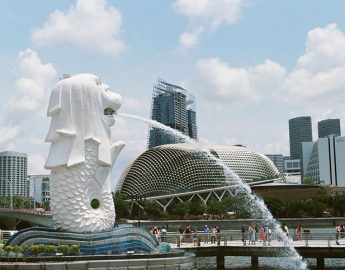
Singapore’s strategic position in Asia situates students at the heart of a vibrant economic and cultural hub. The city-state serves as a crossroads for international trade and innovation, exposing students to the flow of ideas from across the region and the world. Its diverse population and global connections also create opportunities for observing real-world interactions between different economic systems and cultural practices. Indeed, living and learning in this environment allows students to understand how regional developments influence global trends, fostering a practical awareness of international dynamics that complements their academic studies.
Exposure to both Western and Asian perspectives helps students appreciate how different societies approach politics and economics. They begin to see the ways in which decisions in one region can ripple across the globe, affecting markets and communities elsewhere. This dual perspective encourages them to think critically about international relationships and to recognize the interconnectedness of global systems. In the end, students develop a more nuanced understanding of global interdependence and the skills needed to navigate complex, multicultural environments.
The IB Programme: Preparing Students for a Borderless Future
The IB programme in Singapore international schools places students in an environment that reflects the interconnected world they will eventually enter. Challenged by rigorous academics and exposed to international perspectives, students develop the skills and awareness needed to approach complex problems thoughtfully. This preparation equips them to engage confidently in higher education and professional opportunities, ready to contribute meaningfully wherever their future takes them.
Parents who are still comparing schooling options may also find our guide to the best international schools in Singapore helpful for exploring other well-regarded choices.